
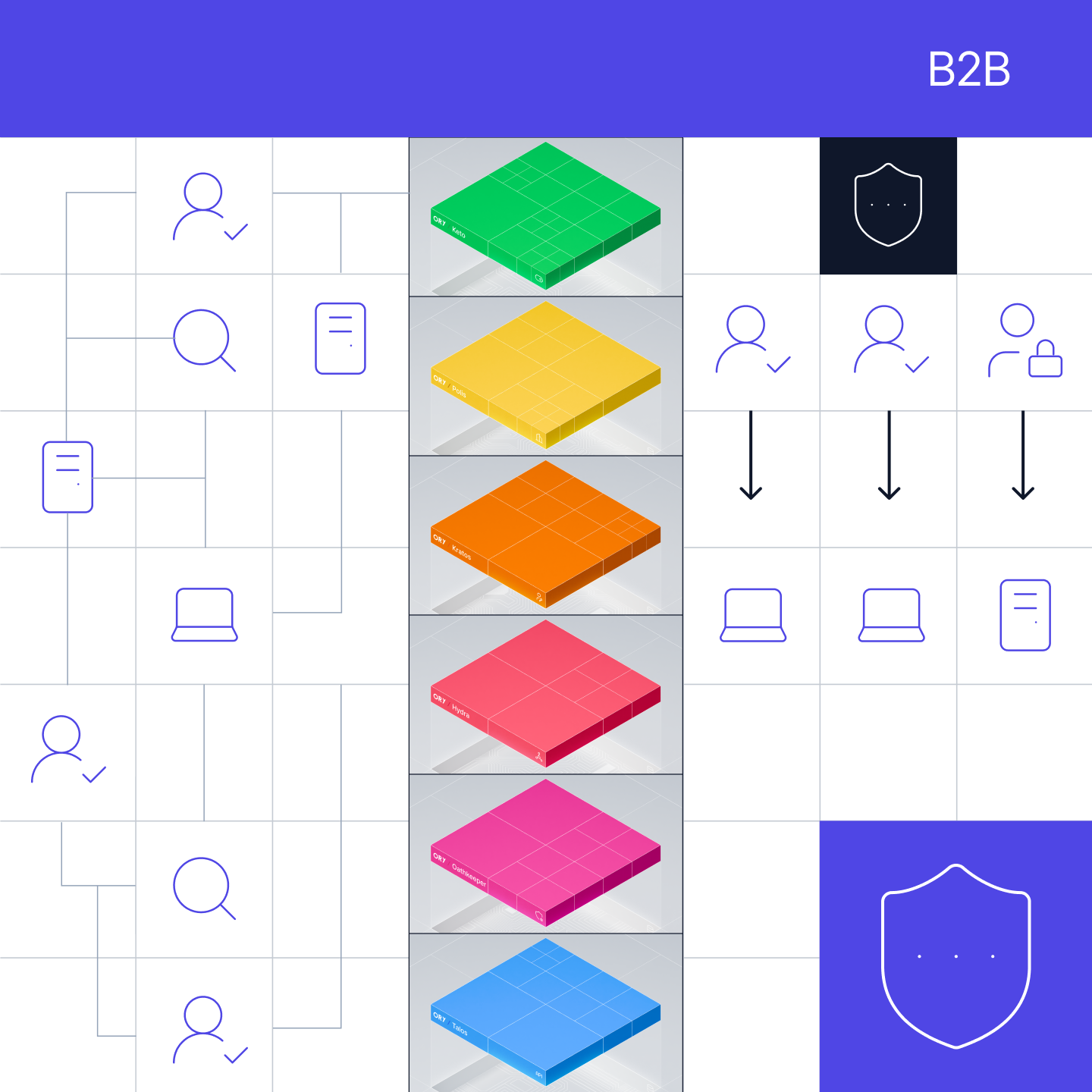


Challenges of B2B Identity and Access Management
Secure B2B access without partner friction
A clunky B2B login experience erodes trust on day one and quietly costs you renewals. B2B IAM must deliver enterprise-grade security and frictionless partner UX simultaneously; those two goals are no longer in tension with modern identity infrastructure.
Onboarding diverse B2B partner groups
Every enterprise partner has a different identity stack — Okta, Microsoft Entra, Google Workspace, or a custom IdP. Manual per-partner integration kills your onboarding velocity. Modern B2B IAM needs self-service IdP configuration so business customers onboard themselves in minutes, not weeks.
Privilege sprawl and over-permissioning
Over-permissioned partner accounts are the #1 driver of B2B security incidents and compliance violations. Fine-grained, role-based, and attribute-based access control prevents privilege sprawl by granting partners exactly what they need, and nothing more.
Data privacy, residency, and compliance
GDPR, SOC 2, HIPAA, and emerging regional regulations make data-residency-aware B2B IAM non-optional. SaaS-only B2B IAM platforms force a single region — self-hostable B2B IAM lets you store partner data exactly where regulators and enterprise customers require.
Integrations with legacy partner identity systems
Enterprise partners bring legacy IdPs, outdated SAML configurations, and inconsistent SCIM implementations. A modern B2B IAM platform handles the protocol diversity (SAML 2.0, OIDC, SCIM 2.0) so your engineering team doesn't have to integrate with every customer's idiosyncrasies one at a time.
Self-service partner onboarding
Business partners self-onboard their teams via guided IdP-configuration flows — no engineering ticket per customer, no per-partner SAML XML editing. New partners go from contract signing to production access in minutes, not weeks.
Frictionless B2B authentication
Social sign-in, passkeys, Enterprise SSO (SAML + OIDC), passwordless, WebAuthn, and adaptive auth — built in. Secure partner access without adding friction that costs you renewal-stage feedback.
Fine-grained B2B permissions
Ory provides precise, least-privilege access with RBAC and Google-Zanzibar-inspired relationship-based authorization (ReBAC). Centralize partner permission policies in one place — no application-code changes needed when permissions evolve.
Headless, API-first B2B identity
Ory's B2B IAM APIs are decoupled from the UI — so you ship the partner-portal experience your designers actually want, on any platform (web, mobile, embedded), without bending to vendor-provided login templates.
Global compliance and data residency
Global database replication keeps partner identity data consistent across regions while honoring data-residency requirements (GDPR, SOC 2, regional). One B2B IAM platform, many jurisdictions, no synchronization headaches.
Flexible deployment
Run Ory in your own environment when enterprise customers require it, or use Ory Network for managed cloud B2B IAM when speed-to-market matters. Same APIs, same protocols, your choice — the deployment flexibility no SaaS-only B2B IAM vendor offers.
Our goal was to provide a unified, secure, and consistent user experience across all buying, selling, and brokering groups with the ability to learn, adapt, and customize to user preferences and tendencies.


Tamer Shlash
Software Engineer
Deploy it your way
Self-hosted to SaaS: full control over your infrastructure, data, and compliance.
Open Source Deployment — Run and try Ory’s Open Source components with maximum flexibility. Perfect to meet your specific use-cases or proof-of-concept your next big idea. 
Ory Enterprise License
OEL Deployment — Leverage Ory's optimized code base with premium support for mission-critical production environments, on-prem, self-hosted – wherever else you need it, always up to date. 
Ory Network
Ory Network deployment — Enable your instant-on global identity system with speed, security, compliance and support for fastest time to value and lowest total cost of ownership.
Explore B2B IAM capabilities in depth
Six core B2B IAM capabilities every B2B SaaS app needs — and how Ory delivers each.
Enterprise SSO (SAML and OIDC for the IdPs your enterprise customers actually use)Passwordless authentication (Replace partner passwords with passkeys, magic links, and WebAuthn)Multi-factor authentication (MFA) (Ensure leaked passwords don't compromise your business)Multi-region deployment (Store partner identity data where regulators and customers require)Scalability (Handle traffic spikes and millions of concurrent partner users without latency)Zero trust architecture (Verify every partner request, every time — the modern B2B security posture)
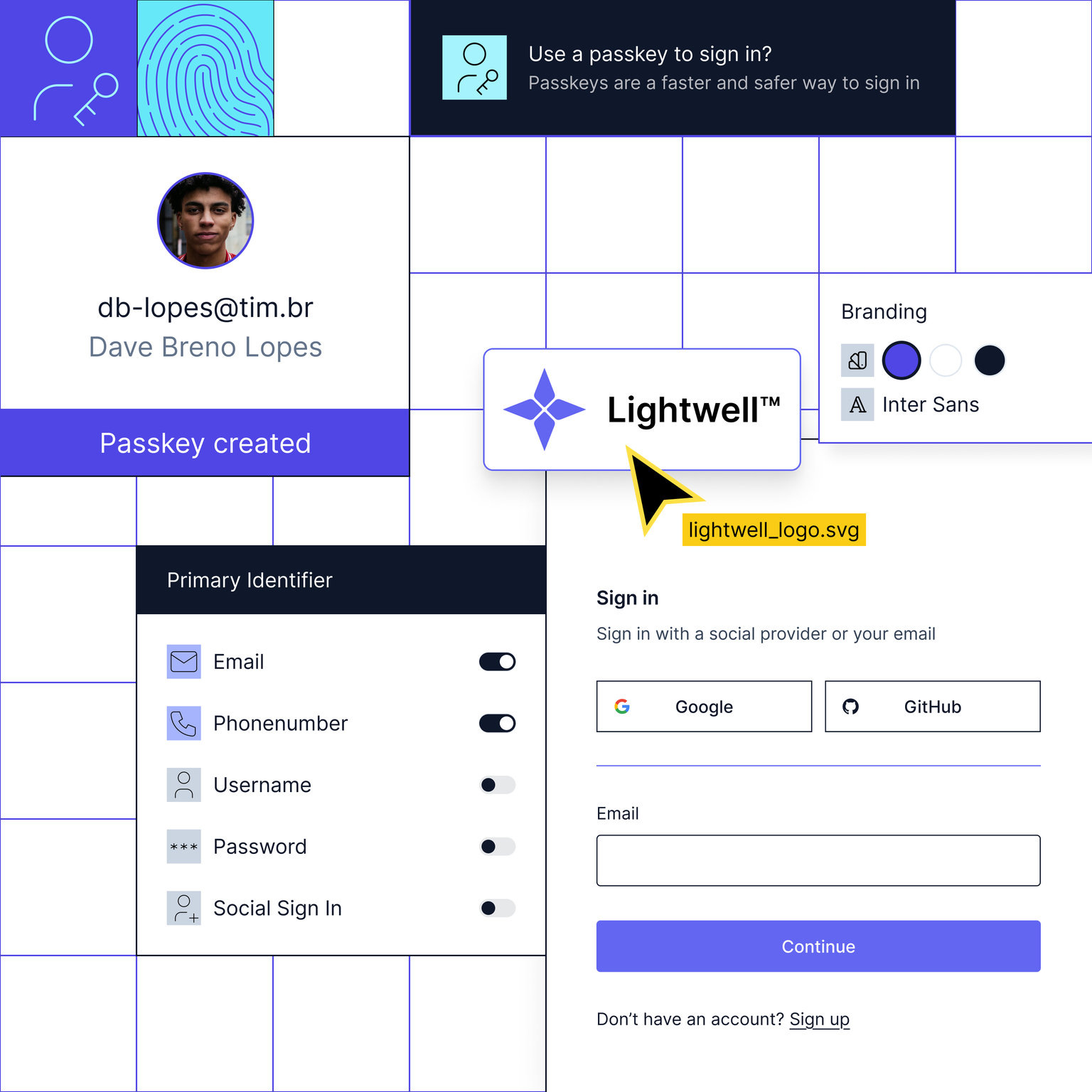
Modular and modern IAM & CIAM
Open-source powered, fully customizable Identity and Access Management solutions. Use them all or bolt-on individual solutions to satisfy your critical use cases

OAuth 2.0 and OpenID Certified® OpenID Connect server — Cloud native, security-first, headless API security for your infrastructure. 
Cloud native user management system — Provision IDs, store user information, configure authentication methods and use a headless API. 
SAML to OpenID Connect bridge and Directory Sync — API integration for Enterprise SSO and user lifecycle management based on SAML, OIDC, and SCIM-based protocols. 
Identity and Access Proxy (IAP) — Authenticate, authorize and mutate any incoming traffic, using Zero Trust / BeyondCorp as open source. 
Authorization Server inspired by Google Zanzibar — Consistent, global Authorization System, providing granular access policies with RBAC, ABAC and ACL. 
Secure API Keys — Turn static API keys into short-lived capability tokens for non human identities. Using token derivation and Macaroon tokens, it enforces strict least-privilege guardrails.


Popular B2B IAM Integrations

Anthropic Claude Agent SDK
The Anthropic Claude Agent SDK is a developer framework by Anthropic that enables the programmatic creation and deployment of autonomous AI agents capable of multi-turn reasoning, executing code, and interacting with file systems and external tools.

Gemini CLI
Gemini CLI is an open-source AI agent developed by Google that brings the power of Gemini models directly into your terminal, enabling developers to understand code, automate complex workflows, and execute tasks using natural language prompts.

Amazon SES
Reliably deliver critical identity-related transactional emails
AWS API Gateway
Secure API front door with fine-grained authorization
More on Ory and B2B IAM
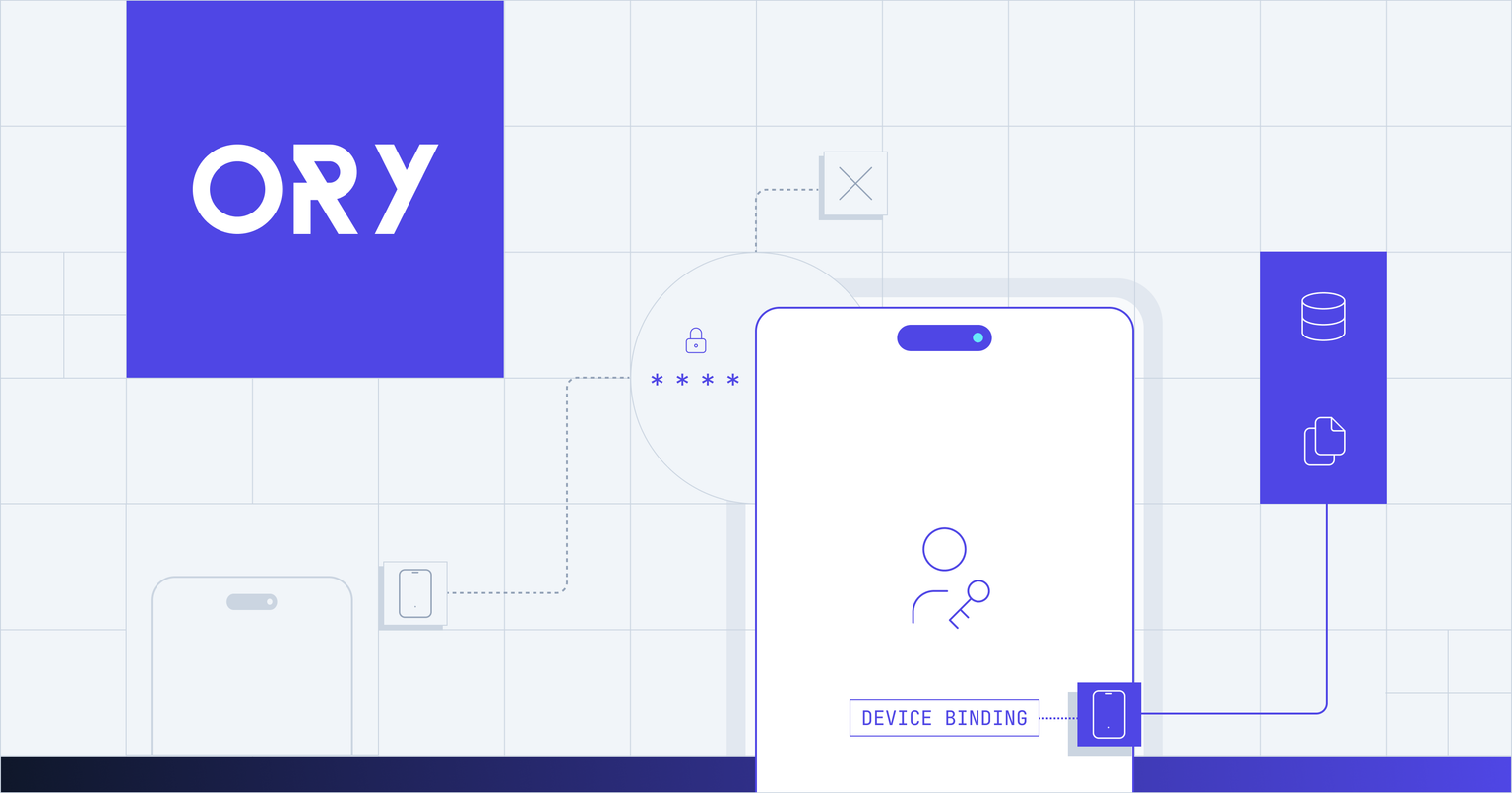
August 06, 2026

Most authentication proves someone holds the right credential, not which device they're holding it on. Device binding (also called device authentication) closes that gap: a private key generated in a phone's secure hardware, attested by Apple or Google, and used for step-up approval or full passwordless login via PIN or biometrics.
July 02, 2026
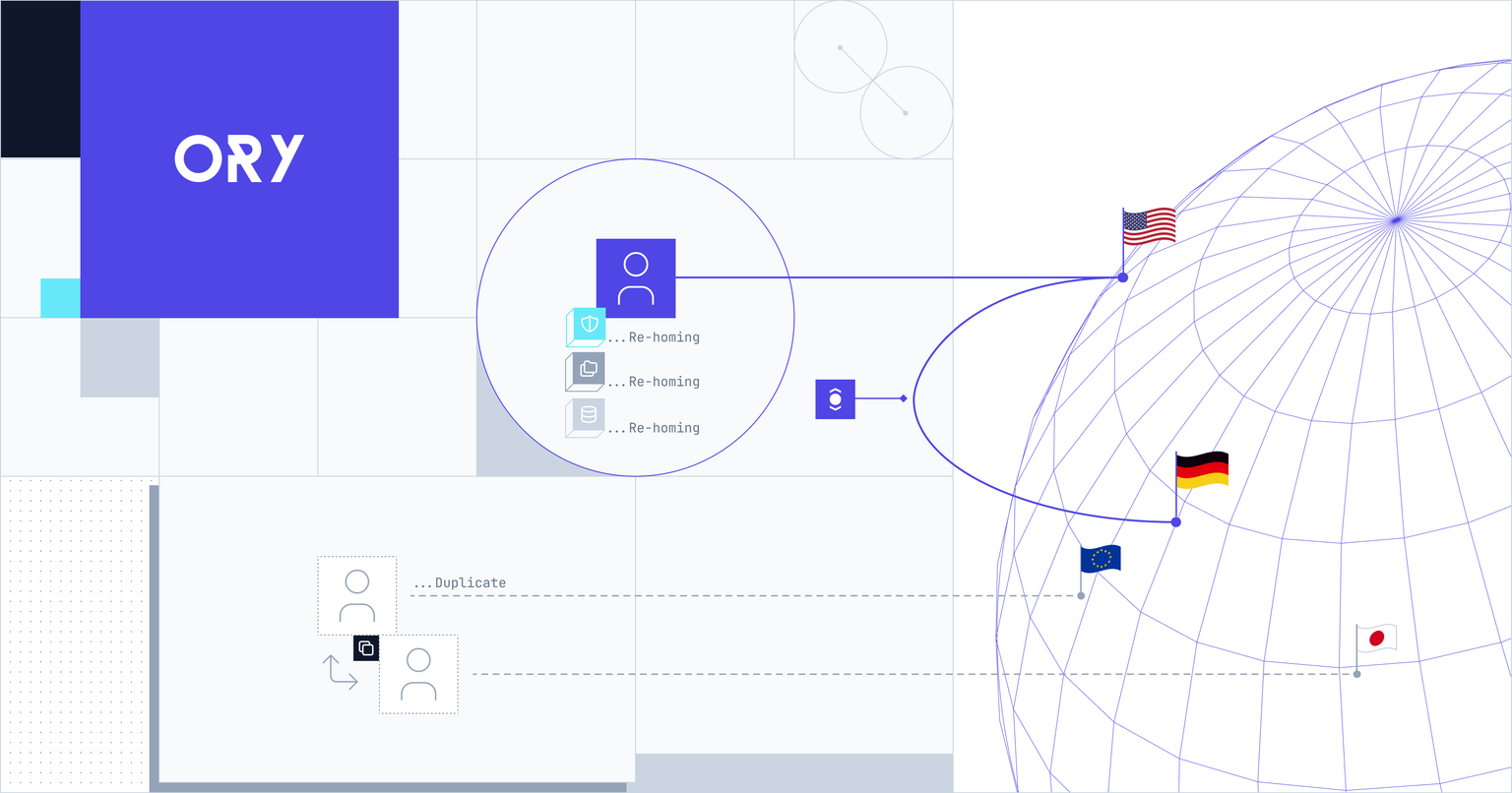
Regulations require user data to stay within borders, but most CIAM and B2B platforms can't move it without rebuilding accounts. Ory can.

July 29, 2024

Learn how a SaaS starter kit provides organizations with: Time savings, cost efficiency, reliability and many other benefits.
March 20, 2024
Explore the build vs. buy debate for identity and access management solutions. Learn the pros and cons of building in-house vs. choosing Ory'ss open-source platform with SSO, directory sync, and identity federation.